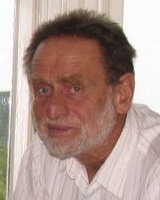
Rainer Sachs, PhD
Adjunct Research Professor of Medicine
Center of Cancer Systems Biology
Professor Emeritus of Mathematics and Physics
Research Professor of Mathematics
University of California, Berkeley
Ray maintains a webpage at UC Berkeley.
Education and Training:
- Postdoctoral, Mathematical Physics, University of London, England
- Postdoctoral, Mathematical Physics, University of Hamburg, Germany
- Ph.D., Theoretical Physics, Syracuse University, NY
- Sc.B., Mathematics, MIT, Cambridge, MA
Positions and Honors:
| 1962 – 63 | Assistant Professor, Dept. Physics, Stevens Institute of Technology, Hoboken NJ |
| 1963 – 66 | Associate Professor, Dept. Physics, University of Texas at Austin |
| 1966 | Guggenheim Fellowship |
| 1966 – 68 | Professor, Dept. Physics, University of Texas at Austin |
| 1969 – 92 | Professor, Depts. Physics and Mathematics, University of California at Berkeley |
| 2005 – 15 | Adjunct Professor, Tufts University School of Medicine |
| 1993 – | Professor Emeritus, Dept. Physics and Dept. Mathematics, University of California at Berkeley |
| 1993 – | Research Professor of Mathematics, University of California at Berkeley |
| 2008 – | Editorial Board, Biology Direct, Mathematical Biology |
Recently Completed Research Support:
DOE/Office of Science: BER (PI: P. Hahnfeldt; Consultant: R. Sachs) 7/2009 – 7/2013
Intercellular Interactions during Tumor Progression: Implications for Low-Dose Risk.
The goal of the grant is to analyze the implications of intercellular interactions on ionizing-radiation induced cancer risks at low and very low doses. Such interactions call into question a standard microdosimetric argument for risk linearity; a key question is to estimate in which direction the possible deviations from linearity may be.
NASA | NSCOR 04-0014-0017 / NNJ04HJ12G / NNJ06HA28G (PI: L. Hlatky; Asst. Dir.: R. Sachs) 10/1/2004 – 10/31/2010
NSCOR: Solid Tumor Risk Estimation: Incorporating Intercellular Interaction Effects.
The goal of the overall grant is to study radiation solid tumor risk to astronauts on an extended space mission, experimentally and mathematically. A Berkeley subcontract (PI: Sachs) emphasizes microdosimetry and the role of chromosome aberrations in carcinogenesis.
NIH | RO1 GM 068423 (PI: R. Sachs) 7/1/2003 – 6/30/2008
Updating Chromosome Aberration Simulator (CAS) Software.
Main goals were to make CAS freely available to the radiation cytogenetics community and to extend it.
DOE | DE-FG02-03ER63668 (PI: R. Sachs) 09/1/2003 – 8/31/2007
Modeling Interellations Between the Bystander Effect, Chromosomal Instability, and Radiation Risk.
The major goal of this project was to model signaling in the radiation bystander effect and low-dose cancer risk, using mathematical formalisms and computer simulations.
Selected Publications:
- Girdhani S, Sachs R, Hlatky L. Biological effects of proton radiation: an update. Radiat Prot Dosimetry. 2015 Sep;166(1-4):334-8. Epub 2015 Apr 20.
- Radivoyevitch T, Siranart N, Hlatky L, Sachs R. Stochastic process pharmacodynamics: dose timing in neonatal gentamicin therapy as an example. AAPS J. 2015 Mar;17(2):447-56. Epub 2015 Feb 7.
- Radivoyevitch T, Li H, Sachs RK. Etiology and treatment of hematological neoplasms: stochastic mathematical models. Adv Exp Med Biol. 2014;844:317-46.
- Gale RP, Hlatky L, Radivoyevitch T, Sachs RK. Why is there so much therapy-related AML and MDS and so little therapy-related CML? Leuk Res. 2014 Oct;38(10):1162-4. Epub 2014 Aug 11.
- Radivoyevitch T, Jankovic GM, Tiu RV, Saunthararajah Y, Jackson RC, Hlatky LR, Gale RP, Sachs RK. Sex differences in the incidence of chronic myeloid leukemia. Radiat Environ Biophys. 2014 Mar;53(1):55-63. Epub 2013 Dec 13.
- Brenner D, Shuryak I, Sachs RK. Radiotherapy-Induced Carcinogenesis and Leukemogenesis: Mechanisms and Quantitative Modeling. In: ALERT — Adverse Late Effects of Cancer Treatment. Volume 1: General Concepts and Specific Precepts (P Rubin, LS Constine, LB Marks, eds). New York: Springer; 2014:205-226. In Series: Medical Radiology -- Radiation Oncology: (LW Brady, H-P Heilmann, M Molls, and C Nieder, series eds).
- Fakir H, Hlatky L, Li H, Sachs R. Repopulation of interacting tumor cells during fractionated radiotherapy: Stochastic modeling of the tumor control probability. Med Phys. 2013 Dec;40(12):121716. Epub 2013 Nov 15.
- Girdhani S, Sachs R, Hlatky L. Biological effects of proton radiation: what we know and don't know. Radiat Res. 2013 Mar;179(3):257-72. Epub 2013 Feb 1.
- Beheshti A, Sachs RK, Peluso M, Rietman E, Hahnfeldt P, Hlatky L. Age and space irradiation modulate tumor progression: implications for carcinogenesis risk. Radiat Res. 2013 Feb;179(2):208-20. Epub 2013 Jan 4.
- Shah DJ, Sachs RK, Wilson DJ. Radiation-induced cancer: a modern view. Br J Radiol. 2012 Dec;85(1020):e1166-73.
- Radivoyevitch T, Hlatky L, Landaw J, Sachs RK. Quantitative modeling of chronic myeloid leukemia: insights from radiobiology. Blood. 2012 May 10;119(19):4363-71. Epub 2012 Feb 21.
- Sachs RK, Johnsson K, Hahnfeldt P, Luo J, Chen A, Hlatky L. A multicellular basis for the origination of blast crisis in chronic myeloid leukemia. Cancer Res. 2011 Apr 15;71(8):2838-47. Epub 2011 Apr 12.
- Shuryak I, Sachs RK, Brenner DJ. A new view of radiation-induced cancer. Radiat Prot Dosimetry. 2011 Feb;143(2-4):358-64. Epub 2010 Nov 27.
- Shuryak I, Sachs RK, Brenner DJ. Cancer risks after radiation exposure in middle age. J Natl Cancer Inst. 2010 Nov 3;102(21):1628-36. Epub 2010 Oct 25.
- Shuryak I, Ullrich RL, Sachs RK, Brenner DJ. The balance between initiation and promotion in radiation-induced murine carcinogenesis. Radiat Res. 2010 Sep;174(3)357-66.
- Fakir H, Hofmann W, Sachs RK. Modeling progression in radiation-induced lung adenocarcinomas. Radiat Environ Biophys. 2010 May;49(2):169-76. Epub 2010 Jan 8.
- Sachs RK, Hlatky L. A rapid-mutation approximation for cell population dynamics. Bull Math Biol. 2010 Feb;72(2):359-74. Epub 2009 Dec 30.
- Fakir H, Tan WY, Hlatky L, Hahnfeldt P, Sachs R. Stochastic population dynamic effects for lung cancer progression. Radiat Res. 2009 Sep;172(3):383-93.
- Shuryak I, Hahnfeldt P, Hlatky L, Sachs RK, Brenner DJ. A new view of radiation-induced cancer: integrating short- and long-term processes. Part II: second cancer risk estimation. Radiat Environ Biophys. 2009 Aug;48(3):275-86. Epub 2009 Jun 5.
- Shuryak I, Hahnfeldt P, Hlatky L, Sachs RK, Brenner DJ. A new view of radiation-induced cancer: integrating short- and long-term processes. Part I: approach. Radiat Environ Biophys. 2009 Aug;48(3);263-74. Epub 2009 Jun 18.
- Fakir H, Hofmann W, Tan W, Sachs RK. Triggering-response model for radiation-induced bystander effects. Radiat Res. 2009 Mar;171(3):320-31.
- Li L, McCormack AA, Nicholson JM, Fabarius A, Hehlmann R, Sachs RK, Duesberg PH. Cancer-causing karyotypes: chromosomal equilibria between destabilizing aneuploidy and stabilizing selection for oncogenic function. Cancer Genet Cytogenet. 2009 Jan 1;188(1):1-25.
- Sachs R. The synergy between mathematics and physics. In: Finding the Big Bang (JE Peebles, RB Partridge, and LA Page Jr, eds.) Cambridge University Press; 2009.
- Brenner D, Shuryak I, Sachs R. Radiotherapy-induced carcinogenesis and leukemogenesis: mechanisms and quantitative modeling. In: ALERT Adverse Late Effects of Cancer Treatment. Volume 1: General Concepts and Principles (P Rubin, LS Constine, LB Marks, JP Williams, and JT Hansen, eds.) New York, NY: Springer; 2009. In Series: Medical Radiology -- Radiation Oncology (LE Brady, H-P Heilmann, M Molls, and C Nieder, series eds.).
- Sachs RK, Shuryak I, Brenner D, Fakir H, Hlatky L, Hahnfeldt P. Second cancers after fractionated radiotherapy: stochastic population dynamics effects. J Theor Biol. 2007 Dec 7;249(3):518-31. Epub 2007 Aug 12.
- Shuryak I, Sachs RK, Brenner DJ. Biophysical models of radiation bystander effects: 1. Spatial effects in three-dimensional tissues. Radiat Res. 2007 Dec;168(6):741-9.
- Hodgson DC, Koh ES, Tran TH, Heydarian M, Tsang R, Pintilie M, Xu T, Huang L, Sachs RK, Brenner DJ. Individualized estimates of second cancer risks after contemporary radiation therapy for Hodgkin lymphoma. Cancer. 2007 Dec 1;110(11):2576-86.
- Brenner DJ, Shuryak I, Russo S, Sachs RK. Reducing second breast cancers: a potential role for prophylactic mammary irradiation. J Clin Oncol. 2007 Nov 1;25(31):4868-72.
- Ponomarev AL, Belli M, Hahnfeldt PJ, Hlatky L, Sachs RK, Cucinotta FA. Subtraction of background damage in PFGE experiments on DNA fragment-size distributions. Radiat Environ Biophys. 2007 Jun;46(2):155-60. Epub 2007 Apr 4.
- Koh ES, Tran TH, Heydarian M, Sachs RK, Tsang RW, Brenner DJ, Pintilie M, Xu T, Chung J, Paul N, Hodgson DC. A comparison of mantle versus involved-field radiotherapy for Hodgkin's lymphoma: reduction in normal tissue dose and second cancer risk. Radiat Oncol. 2007 Mar 15;2:13.
- Levy D, Reeder C, Loucas B, Hlatky L, Chen A, Cornforth M, Sachs R. Interpreting chromosome aberration spectra. J Comput Biol. 2007 Mar;14(2):144-55.
- Duesberg P, Li R, Sachs R, Fabarius A, Upender MB, Hehlmann R. Cancer drug resistance: the central role of the karyotype. Drug Resist Updat. 2007 Feb-Apr;10(1-2):51-8. Epub 2007 Mar 26.
- Shuryak I, Sachs RK, Hlatky L, Little MP, Hahnfeldt P, Brenner DJ. Radiation-induced leukemia at doses relevant to radiation therapy: modeling mechanisms and estimating risks. J Natl Cancer Inst. 2006 Dec; 20;98(24):1794-806.
- Ponomarev AL, Belli M, Hahnfeldt PJ, Hlatky L, Sachs RK, Cucinotta FA. A robust procedure for removing background damage in assays of radiation-induced DNA fragment distributions. Radiat Res. 2006 Dec;166(6):908-16.
- Fakir H, Sachs RK, Stenerlöw B, Hofmann W. Clusters of DNA double-strand breaks induced by different doses of nitrogen ions for various LETs: experimental measurements and theoretical analyses. Radiat Res. 2006 Dec;166(6):917-27.
- Brenner DJ, Sachs RK. Controverse: les faibles doses de radiations ionisantes sont-elles carcinogéniques? Point de vue d'experts de l'Université Columbia, New-York, et de l'Université de Californie, Berkeley. BEH (bulletin épidémiologique hebdomadaire). 2006 Apr 18;15-16:111-2. French.
- Brenner DJ, Sachs RK. Estimating radiation-induced cancer risks at very low doses: rationale for using a linear no-threshold approach. Radiat Environ Biophys. 2006 Mar;44(4):253-6. Epub 2006 Feb 10.
- Sachs RK, Brenner DJ. Solid tumor risks after high doses of ionizing radiation. Proc Natl Acad Sci U S A. 2005 Sep 13;102(37):13040-5. Epub 2005 Sep 6.
- Sachs RK, Chan M, Hlatky L, Hahnfeldt P. Modeling intercellular interactions during carcinogenesis. Radiat Res. 2005 Sep;164(3):324-31.
- Plan Y, Hlatky L, Hahnfeldt P, Sachs R, Loucas B, Cornforth M. Full-color painting reveals an excess of radiation-induced dicentrics involving homologous chromosomes. Int J Radiat Biol. 2005 Aug;81(8):613-20.
- Vives S, Loucas B, Vazquez M, Brenner DJ, Sachs RK, Hlatky L, Cornforth M, Arsuaga J. SCHIP: statistics for chromosome interphase positioning based on interchange data. Bioinformatics. 2005 Jul 15;21(14):3181-2. Epub 2005 May 10.
- Mestres M, Caballin MR, Schmid E, Stephan G, Sachs R, Barrios L, Barquinero JF. Analysis of alpha-particle induced chromosome aberrations in human lymphocytes, using pan-centromeric and pan-telomeric probes. Int J Radiat Biol. 2004 Oct;80(10):737-44.
- Arsuaga J, Greulich-Bode KM, Vazquez M, Bruckner M, Hahnfeldt P, Brenner DJ, Sachs R, Hlatky L. Chromosome spatial clustering inferred from radiogenic aberrations. Int J Radiat Biol. 2004 Jul;80(7):507-15.
- Sachs RK, Levy D, Hahnfeldt P, Hlatky L. Quantitative analysis of radiation-induced chromosome aberrations. Cytogenet Genome Res. 2004;104(1-4):142-8.
- Levy D, Vazquez M, Cornforth MN, Loucas B, Sachs RK, Arsuaga J. Comparing DNA damage-processing pathways by computer analysis of chromosome painting data. J Comput Biol. 2004;11(4):626-41.
- Brenner DJ, Doll R, Goodhead DT, Hall EJ, Land CE, Little JB, Lubin JH, Preston DL, Preston RJ, Puskin JS, Ron E, Sachs RK, Samet JM, Setlow RB, Zaider M. Cancer risks attributable to low doses of ionizing radiation: assessing what we really know. Proc Natl Acad Sci U S A. 2003 Nov 25;100(24):13761-6. Epub 2003 Nov 10.
- Brenner DJ, Sachs RK. Domestic radon risks may be dominated by bystander effects--but the risks are unlikely to be greater than we thought. Health Phys. 2003 Jul;85(1):103-8.
- Levy D, Hlatky L, Sachs RK. Test Applet for Analyzing Cycle Structure and Apparent Incompleteness. http://radiobiology.math.berkeley.edu/CAA/. 2003.
- Vazquez M, Greulich-Bode KM, Arsuaga J, Cornforth M, Brückner M, Sachs RK, Hlatky L, Molls M, Hahnfeldt, P. Computer analysis of mFISH chromosome aberration data uncovers an excess of very complex metaphases. Int J Radiat Biol. 2002 Dec;78(12):1103-15.
- Sachs RK, Arsuaga J, Vázquez M, Hlatky L, Hahnfeldt P. Using graph theory to describe and model chromosome aberrations. Radiat Res. 2002 Nov;158(5):556-67.
- Cornforth MN, Greulich-Bode KM, Loucas BD, Arsuaga J, Vázquez M, Sachs RK, Brückner M, Molls M, Hahnfeldt P, Hlatky L, Brenner DJ. Chromosomes are predominantly located randomly with respect to each other in interphase human cells. J Cell Biol. 2002 Oct 28;159(2):237-44.
- Hlatky L, Sachs RK, Vazquez M, Cornforth MN. Radiation-induced chromosome aberrations: insights gained from biophysical modeling. Bioessays. 2002 Aug;24(8):714-23.
- Brenner DJ, Sachs RK. Do low dose-rate bystander effects influence domestic radon risks? Int J Radiat Biol. 2002 Jul;78(7):593-604.
- Sachs RK, Hlatky LR, Hahnfeldt P. Simple ODE models of tumor growth and anti-angiogenic or radiation treatment. Math Comput Model. 2001 Jun;33(12-13):1297-305.
- Ponomarev AL, Cucinotta FA, Sachs RK, Brenner DJ, Peterson LE. Extrapolation of the dna fragment-size distributions after high-dose irradiation to predict effects at low doses. Radiat Res. 2001 Nov;156(5 Pt 2):594-7.
- Ponomarev AL, Sachs RK. Radiation breakage of DNA: A model based on random-walk chromatin structure. J Math Biol. 2001 Oct;43(4):356-76.
- Radivoyevitch T, Sachs RK, Nikiforov YE, Nikiforova MN, Little MP. On target cell numbers in radiation-induced H4-RET mediated papillary thyroid cancer. Radiat Environ Biophys. 2001 Sep;40(3):191-7.
- Radivoyevitch T, Kozubek S, Sachs RK. Biologically based risk estimation for radiation-induced CML. Inferences from BCR and ABL geometric distributions. Radiat Environ Biophys. 2001 Mar;40(1):1-9.
- Costes S, Sachs R, Hlatky L, Vannais D, Waldren C, Fouladi B. Large-mutation spectra induced at hemizygous loci by low-LET radiation: evidence for intrachromosomal proximity effects. Radiat Res. 2001 Nov;156(5 Pt 1):545-57.
- Brenner DJ, Little JB, Sachs RK. The bystander effect in radiation oncogenesis: II. A quantitative model. Radiat Res. 2001 Mar;155(3):402-8.
- Ponomarev AL, Cucinotta FA, Sachs RK, Brenner DJ. Monte Carlo predictions of DNA fragment-size distributions for large sizes after HZE particle irradiation. Phys Med. 2001;17 Suppl 1:153-6.
- Sachs RK, Levy D, Chen AM, Simpson PJ, Cornforth MN, Ingerman EA, Hahnfeldt P, Hlatky LR. Random breakage and reunion chromosome aberration formation model: an interaction-distance version based on chromatin geometry. Int J Radiat Biol. 2000 Dec;76(12):1579-88.
- Sachs RK, Ponomarev AL, Hahnfeldt P, Hlatky LR. Locations of radiation-produced DNA double strand breaks along chromosomes: a stochastic cluster process formalism. Math Biosci. 1999 Jul;159(2):165-87.
- Sachs RK, Chen MA, Simpson PJ, Hlatky LR, Hahnfeldt P, Savage JR. Clustering of radiation-produced breaks along chromosomes: modelling the effects on chromosome aberrations. Int J Radiat Biol. 1999 Jun;75(6):657-72.
- Sachs R, Brenner DJ. The mechanistic basis of the linear-quadratic formalism. Med Phys. 1998 Oct;25(10):2071-3.
- Sachs RK,Brenner DJ, Hahnfeldt PJ, Hlatky LR. A formalism for analysing large-scale clustering of radiation-induced breaks along chromosomes. Int J Radiat Biol. 1998 Aug;74(2):185-206.
- Sachs RK, Hahnfeldt P, Brenner DJ. The link between low-LET dose-response relations and the underlying kinetics of damage production/repair/misrepair. Int J Radiat Biol. 1997 Oct;72(4):351-74.
- Sachs RK, Chen AM, Brenner DJ. Review: proximity effects in the production of chromosome aberrations by ionizing radiation. Int J Radiat Biol. 1997 Jan;71(1):1-19.
- Sachs RK, Heidenreich WF, Brenner DJ. Dose timing in tumor radiotherapy: considerations of cell number stochasticity. Math Biosci. 1996 Dec;138(2):131-46.
- Sachs RK, van den Engh G, Trask B, Yokota H, Hearst JE. A random-walk/giant-loop model for interphase chromosomes. Proc Natl Acad Sci U S A. 1995 Mar 28;92(7):2710-4.
- Hahnfeldt P, Hlatky LR, Brenner DJ, Sachs RK. Chromosome aberrations produced by radiation: the relationship between excess acentric fragments and dicentrics. Radiat Res. 1995 Feb; 141(2):136-52.
- Sachs RK, Wu H. General Relativity for Mathematicians. Graduate Texts in Mathematics, Springer-Verlag, New York, Heidelberg, Berlin, 1977; (Dover paperback edition, 2007, 2008).
- Proceedings of the International School of Physics "Enrico Fermi" (Italian Physical Society), Course 47: General relativity and cosmology. (RK Sachs, ed.) Academic Press, 1971.